Showing posts with label birthstones. Show all posts

Wednesday, June 1, 2011

PEARLS! BIRTHSTONE FOR JUNE

Pearls are mysterious and misunderstood.  Of all fine jewelry I’ve sold over the years, people knew less about pearls than any other type of gemstone.  There are freshwater pearls, Akoya pearls, baroque pearls, Tahitian pearls, South Sea Pearls, pearls of wisdom and Pearl tampons….see how confusing it all is?  So, as a result, this is a super long post, however, there's a lot to the basics if you're going to be an informed pearl shopper.  If you don't have time, just buy Mikimoto.  Otherwise... 


When I started selling jewelry 20 years ago, I didn’t appreciate pearls.  I thought they were for old ladies, a little too classic for me.  However, the first time I gathered a 36” strand (opera length) of 9mm Mikimoto pearls in my hand I went blind for a minute, composed myself and became a convert.  Cool, white and luxurious, I wrapped them around my neck twice and clasped them.  Doubled like that, they looked substantial and contemporary – not like Margaret Dumont from the Marx Brother’s movies.  Plus, the white of the pearls brightened my face better than any of the concealers in my makeup barrel.  

For centuries, pearls were formed in nature when an irritant (a piece of sand or a bit of shell, for example) made its way inside the shell of a certain mollusk and, knowing the irritant is there (think: annoying spouse) the oyster starts to secrete (shrug really-like leave me alone already) thousands of layers of nacre covering the irritant, which ultimately forms the pearl.  See if you can find the pearl in the image (this is the only type of raw oyster I would eat – one with a big honking pearl stuck in it instead of a snot ball).  Before the beginning of the 20th century, the only means of obtaining pearls was by pearl diving or manually gathering very large numbers of pearl oysters (or pearl mussels) from the ocean floor (or lake, or river bottom), bringing them to the surface, opening them and harvesting the pearls (God, so much work).  A ton of oysters might produce only 3 or 4 quality pearls.  

1893, Koikichi Mikimoto, started farming pearls and produced the world's first cultured pearls.  This brought the dangerous business of pearl diving just about to an end.  His process of culturing pearls in oyster beds by manually implanting the irritant rather than allowing nature to take its course produces some of the most valuable pearls in the world.  

How to Buy Pearls – Important Things to Look For

Luster:  this is the sheen on the pearl caused by the layers of nacre.  Usually the more nacre the more luster, the more beautiful the pearl.  In my opinion, this is the first thing you look for and the most important factor when shopping for pearls.


Perfection:  the second most important element when evaluating pearls.  Blemishes or blebs are naturally found on pearls and are caused by the conditions present when they are forming.  They can be proof a pearl is real but the fewer blemishes the more valuable the pearl.  No one wants to wear pearls with goobers on them.  

Shape:  perfectly round pearls are rare and expensive; however, South Sea pearls can produce unusual shapes and are coveted as well. 

Color:  pearls are available in many colors based on the type of oyster that forms it.  The most popular Akoya (saltwater pearls) colors are white, cream and rose´, while gold and peacock green are popular South Sea colors.  Color may not be indicative of value but even and intense distribution of color is.  Choose the color that best compliments your complexion, not your industrial strength makeup.
Size:  Pearls are measured by millimeters in size starting with 3mm to 10mm for Akoya’s and 8mm to 20mm for South Sea’s.  Naturally, larger pearls are more expensive than smaller ones and as with all things...the bigger the better.  

Types of Pearls – The Technical Stuff But Important to Know the Difference

Akoya ~ produced in Japan’s Akoya oysters, they are the most popular saltwater pearls.  They grow from 3mm-10mm and come in white, cream, pink, light green, blue and silver.

Freshwater ~ produced mostly in the lakes and rivers of China, freshwater pearls are cultured in a mussel rather than an oyster and are often less expensive than Akoya’s or South Seas.  Small in size, as many as ten to fourteen freshwater pearls can be cultured in one mussel. Perfectly round freshwater pearls are extremely rare and they are most often found in unusual shapes. 

South Sea White ~ produced by the silver-lipped South Sea oyster.  They have a slight opalescent appearance which subtly changes in different light making them incredibly beautiful.  Usually available in sizes starting at 9mm, their shapes range from round, oval or teardrop to free-form baroque.

South Sea Golden ~ produced by the golden-lipped South Sea oyster. Their natural golden color is an unusual find and extremely rare.  Colors range from light champagne to a very rare, deep gold. This oyster can also produce richly luminescent white pearls, but the deeper golden colors are the most coveted of all pearls.  Golden South Sea’s usually start at 9mm in size and go up, with beautiful large round, oval, teardrop or baroque shapes.

Tahitian or Black South Sea ~ produced in black lipped oysters off the waters of Tahiti and Okanawa with sizes that range from 8mm-20mm.  Although not actually black, colors range from slate grey, silver and pistachio to peacock green and midnight black with overtones of green, rosé or blue. 

Conch Pearls ~ these natural pearls are among the rarest pearls in the world and are harvested from the Queen conch, a large sea snail with a heavy, lustrous shell that lives in the Caribbean and the Gulf of Mexico. The highest-quality Conch pearls are characterized by a unique design that gives the appearance of a fire burning on the surface.

Caring for Pearls 

Remember your pearls are organic little seeds of nature.  They don’t like acid, alkaline or extreme temperatures.  Be sure to keep them away from perfume, hairspray or makeup.  I always tell customers when wearing pearls, they should be the last thing you put on and the first thing you take off.  Do not put them on then decide to douse yourself in a tornado of Jo Malone.  Wipe them with a dry cotton cloth after wear (do not be tempted to use your husband’s tighty-whities - you can spring for a nice cloth) and store them separately in their own box.  But please, please wear your pearls.  If they are stored for long periods of time without wear they will dry out.  Even though they don’t particularly like lying against your skin, they hate being ignored even more. When you notice a little bit of the silk string in between your pearls - it’s time for restringing - usually every year or so if you wear them all the time, or every two to three years with occasional wear.  Bring them to your trusted jeweler for this job.  Be sure you both agree on the number of pearls on your strand (count them and document it) and agree on knotting in between the pearls before they are sent to the stringer.  Knotting is very important.  They are not pop beads from the toy store.  If your necklace breaks maybe you’ll only lose one pearl rather than have all of them fly onto the floor.  Knotting ensures your pearls are protected.

Remember the pearls you see in a costume or fashion jewelry department are usually not real pearls (however, could be freshwater) but are made from plastic or some type of resin.  They are usually very well priced, mostly under $100.  Fashion pearl vendor, Carolee, is a good source of fashion pearl jewelry, especially wedding pearls.  They have a great selection worth looking at.

TAGS: , , , ,

Sunday, May 15, 2011

EMERALDS! BIRTHSTONE FOR MAY

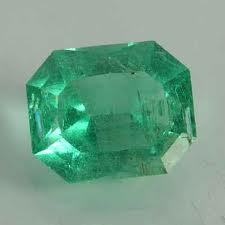
When I first started in the jewelry business, we carried emeralds – or something that was supposed to look like an emerald but really looked more like square boogers.  Many were off color – almost grey-green, and most were very small set in the typical ring, earring and necklace mountings.  Wearing boogers is not cool. As you will read below, color is the main thing that makes an emerald valuable. 

Emeralds have been prized for thousands of years for their lush green hues and rare beauty. Throughout the ancient world, emeralds symbolized eternal hope, rebirth and the arrival of spring - and some cultures believed the gem rewarded its owners with love, intelligence, eloquence and great wealth. Colombia continues to be at the top of the list of the countries in which fine emeralds are found.  Colombian emeralds differ from emeralds found in other deposits because they have an especially fine, clear emerald green hue.  This beautiful color is so valued in the international emerald trade that even obvious inclusions are regarded as acceptable.   

STATISTICS AND CARE

Emeralds rate 7.5-8 out of 10 on the Mohs hardness scale but they can be fragile due to the inclusions which are found naturally in the stones.  It's actually OK to see those little marks and lines throughout your stone.  Emeralds require more special care than most stones (that alone should tell you something....anything that requires more care than your hair requires further thought).  They should never be submerged in hot water or placed near heat sources so wearing them can give you a good reason not to have to cook.  Never put your emerald in an ultra-sonic machine to clean it as the intense vibrations of the machine can pulverize a stone and break it apart.  This actually happened to one of my colleagues. They wound up straining the emerald dust through paper towels while schvitzing in the back room and had to order the customer a new ring...believe me, you only learn that lesson once in your life.  Be sure take off your emerald jewelry before you do dishes (another reason to wear them – you don’t have to do housework either) as cleaning products can remove the oils used to protect and seal a stone after it’s been cut.  You can use a very soft toothbrush along with water to clean a stone then wipe it dry with a soft cloth.  Every 2-5 years emeralds should be re-oiled by a professional.  Be sure the jeweler you use is familiar with handling these special stones. 

COLOR

As I said before, color is the most important aspect when considering emeralds. Generally speaking the darker the color the more valuable the emerald. However, just because an emerald is dark green does not make it valuable. A fine emerald will have a dark blue green color while at the same time be translucent and brilliant.  Fine inclusions do not diminish its value. On the contrary, even with inclusions, an emerald in a deep, lively green still has a much higher value than an almost flawless emerald whose color is paler. There are many dark opaque stones that are very cheap (unfortunately, this is what you see most often in department stores). Obtaining good color in emeralds at an affordable price was the reason my store stopped carrying a large assortment of these stones and why I never purchased one of my own. Even with my store discount, a really good emerald was still so expensive, that along with the fragility of the stone, I was concerned I wouldn't be comfortable wearing it all the time, therefore, it wouldn't pass my “Times Per Wear” test.  TPW is my theory for buying something expensive and it’s a good rule to employ.  If you are not putting your new thing on while in the car in the parking lot, wearing those new shoes right out of the store, or wearing your new thing so much your friends are saying...."uh...don't you have anything else to put on," you must rethink your purchase.  You have to feel wanton lust for it, immediately rip off those tags, put it on and then proceed to wear it until you are bored with it.  People who have new things in their closets with tags that have not yet been test driven saving it “for something good” are totally breaking the TPW rule.

CLARITY 

We've established that emeralds tend to have numerous inclusions.  Unlike diamonds, where a 10x loupe is used to determine quality, emeralds are graded by eye. If an emerald has no visible inclusions to the eye it is considered flawless. Stones that lack inclusions are extremely rare and therefore almost all emeralds are treated, or "oiled", to enhance the apparent clarity.  Pure green emeralds with no inclusions are one of the most expensive stones you can buy.  Although my normal everyday assortment of emeralds was not of top quality, I did have access to a few wonderful vendors who carried top notch beautiful stones. You might not think customers would buy an expensive emerald from a large retailer, but we did sell a magnificent emerald ring to one of our best customers by bringing stones in for her to review and then having her selection set by my jeweler.  We sold the four carat emerald cut emerald with trillion cut diamonds on either side for approximately $25,000.  This client trusted us so much she didn’t mind paying the premium that can come with buying retail.  This is why my phone number was on speed dial with many of my clients - they trusted me. 

CUT

The cut is usually the most boring part of the four C's and many people don't understand how important it really is.  The faceting, shape, width and depth of the emerald make up the cut. The ideal cut emerald will be symmetrical and have uniform facets that provide for maximum color and brilliance. Round emeralds are least common because you must waste more material to cut a round but you can find them, along with oval cuts, used as cabochon stones (rounded and smooth rather than faceted) as a center or accent stone.  A rectangular step cut known as the "emerald" cut is generally thought to produce the best end result for emeralds and, in my opinion, along with a square cut, is really the only cut for an emerald stone. 

CARAT WEIGHT 

Although size really does matter, the actual carat weight of an emerald is not as important as the color or clarity when determining the value of a stone. An eight carat significantly included emerald of dark color without translucency would not be as valuable as a four-carat stone of impeccable color, translucency, and a few inclusions. Thus, the color, clarity, and cut should be taken into consideration before carat weight. I've decided, after looking at the following images of amazing emeralds, that if I can't wear it on my head or pin it to my boobs, I'll probably never own one. 


WOW EMERALDS WORTH LUSTING OVER.....


Angelina Jolie's 115 carat Lorraine Schwartz Colombian emerald earrings and 65 carat emerald ring worn to the 2009 Oscar’s.  Not sure if Jolie owns these gems or borrowed them.  Lorraine Schwartz, who makes some of the most amazing pieces out there, does not pay celebrities to wear her jewelry as some jewelers do as a way to advertise. The earrings alone are valued at $2.5 million. 


Of course only Angelina Jolie would wear the most amazing oval cut emeralds that completely debunk the information I provided on the cuts of stones but I'm using her jewelry anyway.


Sotheby’s May 17, 2011 Auction:
“12 Carat 16th Century Colombian Emerald Ring"

Estimated sale:   $500,000-$800,000

Remember do not wear this while doing the dishes.

Offered at the May 17, 2011 Sotheby’s auction is a 16th century Colombian emerald which exhibits the most vivid green, exemplified in this superb emerald and diamond ring, set with an octagonal step-cut Colombian emerald weighing 12.03 carats, estimated to sell for $500,000-800,000. “Natural emeralds from Colombia of this size and quality represent a great rarity” and this gemstone has been described by the SSEF laboratory as “a very exceptional treasure."


Sotheby’s May 17, 2011 Auction: 
“The Most Important Diamond and Emerald Tiara”

Estimated sale:  $5,000,000-$10,000,000

Remember my TPW rule before you place your bid.

The most valuable emerald and diamond tiara to appear at an auction in more than 30 years will be auctioned by Sotheby's May 17 at its Magnificent and Noble Jewels sale in Geneva.  This highly important and rare tiara is composed of 11 Colombian emerald pear-shaped drops which total more than 500 carats.  The piece is estimated to sell for $5 million to $10 million.  The tiara was commissioned circa 1900, and was formerly in the collection of Princess Katharina Henckel von Donnersmarck.   


Christies April 2011 Auction: 
The Catherine the Great Emerald and Diamond Brooch

Estimated sale: $1,000,000-1,500,000

SOLD - Realized Price at Auction - $1,650,500.


Is it wrong to wear an emerald as large as your kneecap when going food shopping?


The center of this brooch is a hexagonal-cut Colombian emerald of 60-70 carats, secured within an openwork two-tiered rose-cut diamonds border, surrounded by a row of old mine-cut diamonds, mounted in silver-topped gold, from the mid 18th century.  The brooch stem may be detached and the brooch may be worn as a pendant with an additional pendant hoop.  

An important imperial jewel, the Catherine the Great Emerald and Diamond Brooch evokes the bygone days of Russian majesty. It is a testament to an empire and a glittering memento which adorned princesses, grand duchesses and empresses alike, and is now being offered at auction for the first time in 40 years. With such a history, the possession of a jewel of this quality and rarity would certainly be the center of any modern collection.  

It was acquired for Catherine II of Russia after she ascended to the throne in 1762 and it became known as one of the most outstanding jewels in her vast collection.  To historians she is Catherine the Great.  To Russian nobles and commoners of her time she was the "beloved mother" of her people.  With not a single drop of Russian blood in her veins, for her contemporaries and for successive generations, she was to become the very embodiment of Russia, ruling a mighty empire for thirty-four years.  "Russia above all" was her credo.  Christie's Features Archive, 30 March 2010.